The Old Gold Swap jewellery often sits unused in lockers or drawers—outdated designs, broken chains, single earrings, or pieces you simply no longer wear. Instead of letting that gold remain unused, you can consider an old gold swap, where your existing gold jewellery is exchanged toward a new piece.
The process may seem complicated at first, especially when it comes to purity, valuation, deductions, and making charges. This guide explains the old gold swap process step by step so you can understand what happens at each stage and what to check before completing the exchange.
Table of Contents
ToggleWhat Is an Old Gold Swap?
An old gold swap is the process of giving your existing gold jewellery to a jeweller and using its assessed value toward the purchase of new jewellery.
For example, suppose you have an old gold chain that you no longer wear. The jeweller checks its purity and weight and calculates its exchange value. That value can then be adjusted against the price of your new jewellery.
The final amount you pay generally depends on:
- Purity of your old gold
- Net gold weight
- Current gold rate
- Applicable deductions
- Value of the new jewellery
- Making charges
- Applicable taxes
Why Do People Exchange Old Gold?
There are several practical reasons to consider an old gold swap.
1. Upgrade Your Design
Jewellery trends and personal preferences change over time. An old design can be exchanged for a more modern necklace, ring, bracelet, earrings, or another piece.
2. Make Better Use of Unused Jewellery
If you rarely wear a particular item, exchanging it can turn unused jewellery into something more useful.
3. Create New Jewellery
Some people exchange old gold when they want jewellery for weddings, festivals, anniversaries, or other occasions.
4. Simplify Your Jewellery Collection
Instead of keeping several old or damaged pieces, you can consolidate their value into a new piece that suits your current needs.
Step-by-Step Guide to an Old Gold Swap
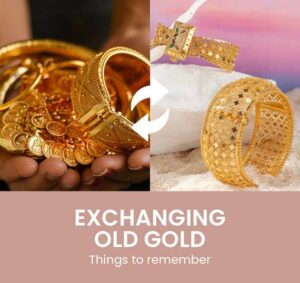
Step 1: Collect Your Old Gold Jewellery
Start by gathering the jewellery you want to exchange.
It could include:
- Old necklaces
- Chains
- Rings
- Bracelets
- Bangles
- Earrings
- Broken gold jewellery
- Outdated designs
- Single or damaged pieces
If you have the original invoice, certificate, or hallmark information, keep it with the jewellery. While documentation may not always be mandatory for an exchange, it can help establish details about the item.
Step 2: Choose a Trusted Jeweller
The jeweller you choose is an important part of the exchange process.
Look for a jeweller who clearly explains:
- Gold purity
- Weight calculation
- Current gold rate
- Exchange value
- Deductions
- Making charges
- Taxes
- Final payable amount
A transparent valuation process helps you understand exactly how your old gold is being valued.
Step 3: Jewellery Inspection
Once you take your jewellery to the jeweller, it will usually be inspected.
The jeweller may check:
- Hallmark information
- Purity
- Weight
- Type of jewellery
- Presence of stones or other materials
- Condition of the item
If your jewellery contains gemstones, beads, enamel, lac, or other non-gold components, these may need to be separated from the gold weight for valuation.
This is important because you generally want to know the net gold weight, rather than simply relying on the total weight of the jewellery.
Step 4: Purity Testing : The Old Gold Swap
Gold jewellery can have different purity levels, such as 24K, 22K, 20K, or 18K.
For jewellery, 22K gold is commonly used, while other purities are also available depending on the product.
A jeweller may use appropriate testing equipment to determine the purity of your old gold. If the jewellery has a hallmark, the hallmark information can also help identify its purity.
Ask the jeweller what purity has been determined before moving ahead with the exchange.
Step 5: Determine the Net Gold Weight
The next step is determining how much actual gold is present in the jewellery.
For example, imagine a necklace weighs 20 grams in total, but it contains stones or other non-gold components weighing 3 grams.
The net gold weight would be approximately:
20 g − 3 g = 17 g
The exact calculation depends on the jewellery and the jeweller’s testing and valuation process.
Always ask for the gross weight, deductions, and net gold weight to be clearly explained.
Step 6: Check the Applicable Gold Rate
The jeweller then applies the relevant gold rate to the assessed purity and net gold weight.
For example, if the assessed value of your old gold is ₹90,000, that amount becomes the basis for adjusting the exchange value against your new jewellery.
Gold prices can change frequently, so ask which rate is being used for the transaction.
A simple question such as “Which gold rate are you applying for my old gold?” can help avoid confusion.
Step 7: Understand Exchange Deductions
This is one of the most important parts of an old gold swap.
Depending on the jeweller’s policy and the condition and type of jewellery, deductions may apply during valuation.
Possible factors can include:
- Non-gold material
- Stone weight
- Purity difference
- Refining or melting-related costs
- Other applicable exchange terms
The exact deduction varies from one transaction and jeweller to another.
Before agreeing, ask for a written or clearly itemized calculation showing how the final exchange value was reached.
Step 8: Select Your New Jewellery
Once you know the approximate exchange value of your old gold, you can select your new jewellery.
Depending on your requirement, you might choose:
- Gold rings
- Necklaces
- Earrings
- Bangles
- Bracelets
- Bridal jewellery
- Custom jewellery
- Daily-wear jewellery
At this stage, compare the new jewellery’s gold weight, purity, making charges, and overall price.
Step 9: Calculate Making Charges
The new jewellery will generally have its own making charges.
Making charges cover the craftsmanship and manufacturing involved in creating the jewellery. They can vary significantly depending on the design and workmanship.
For example:
New jewellery price = Gold value + Making charges + applicable taxes
Your old gold exchange value is then adjusted against the applicable amount.
This is why two jewellery pieces with similar gold weights can have different final prices.
Step 10: Understand the Final Calculation
Let’s consider a simple example.
Suppose:
- Exchange value of old gold = ₹80,000
- New jewellery value = ₹1,20,000
- Making charges = ₹10,000
- Applicable taxes = ₹X
The exchange value is adjusted against the total transaction value according to the jeweller’s stated calculation.
The amount you ultimately pay will therefore depend on the complete bill—not just the difference between the old and new gold weights.
Always review the complete calculation before making the final payment.
What Should You Check Before an Old Gold Swap?
Before completing your exchange, ask these questions:
1. What is the purity of my old gold?
Make sure you understand whether it is being valued as 22K, 20K, 18K, or another purity.
2. What is the net gold weight?
Don’t rely only on the total weight of the jewellery.
3. What gold rate is being used?
Ask for the rate applicable to the transaction.
4. Are there any deductions?
Ask what deductions are being made and why.
5. What are the making charges on the new jewellery?
Get these charges clearly mentioned.
6. What taxes are applicable?
Check the bill for applicable taxes.
7. What is the final amount payable?
Ask for an itemized bill showing the exchange value and the final amount.
Old Gold Swap vs Selling Old Gold
An old gold swap and an outright sale are not exactly the same.
In an old gold swap, you exchange your old jewellery and use its assessed value toward new jewellery.
In an outright sale, you sell the old gold and receive the applicable payment rather than using it directly toward another jewellery purchase.
Which option makes sense depends on your objective, the jeweller’s terms, and the complete financial calculation.
Is Hallmarked Gold Important?
Hallmarking provides information about the purity of gold jewellery. If your jewellery carries a hallmark, keep that information available during the valuation.
For newer jewellery purchases, buyers should check the hallmark and relevant identification details provided with the product.
If you are unsure about the markings on your jewellery, ask the jeweller to explain them before proceeding.
Tips for a Transparent Old Gold Exchange
Here are some simple tips to make the process easier:
Get the valuation explained: Understand how the jeweller arrived at the exchange value.
Compare rates: If the transaction is significant, you can compare the terms offered by more than one established jeweller.
Check the net weight: Make sure stone and non-gold components are accounted for appropriately.
Ask about deductions: Don’t hesitate to ask what each deduction represents.
Review making charges: The exchange value of your old gold and the making charges of your new jewellery are separate parts of the calculation.
Get a proper bill: Keep the invoice showing the transaction details.
Don’t rush: Take time to understand the calculation before approving the exchange.
Final Thoughts
An old gold swap can be a practical way to turn unused jewellery into a new design. However, understanding the valuation process is just as important as choosing the jewellery itself.
From purity testing and net weight calculation to gold rates, deductions, making charges, and the final bill, every stage can affect the amount you pay.
The key is transparency. Choose a trusted jeweller, ask for a clear valuation, understand all applicable charges, and review the final calculation before completing your old gold exchange.
Whether you’re upgrading an old chain, exchanging outdated jewellery, or creating a new piece for a special occasion, knowing the process can help you make a more informed jewellery purchase.
1 thought on “The Old Gold Swap: A Step-by-Step Guide”